
EV charging and solar
How to charge your EV with solar without wasting the opportunity
Plugging in an electric vehicle as soon as you arrive home is convenient, but it can also coincide with the household's busiest and most expensive period. A better approach is to coordinate the car, solar, battery and electricity tariff so charging happens from surplus solar first, then from an appropriate low-cost grid window when required.
The smartest way to charge your EV with solar is to automate when and how it charges. Use surplus solar when the car is available, avoid draining the home battery during the evening peak, and schedule grid charging for a suitable lower-cost period when solar cannot provide enough energy.
At a Glance
A practical charging hierarchy for making better use of solar generation.
Direct otherwise-exported daytime energy into the car when it is at home.
Avoid letting EV charging rapidly consume stored energy during high household demand.
When needed, use an appropriate lower-cost tariff window instead of charging immediately.
Coordinate the inverter, battery and charger so monitoring and control remain straightforward.
Why is plugging in at 5 pm often the wrong move?
For many households, arriving home triggers several loads at once: air conditioning, cooking, washing and general after-work activity. Starting the EV charger immediately adds another substantial load at the same time.
If the home has a battery, uncontrolled EV charging can deplete it quickly. Without a battery, the charger may draw from the grid during a higher-cost period. Either way, the household can miss the main opportunity created by having solar: moving flexible demand into periods when solar energy is available.
This does not mean giving up the simple routine of plugging in when you arrive. With suitable controls, you can connect the car immediately while instructing it or the charger to wait. Charging can begin later in a scheduled window or respond automatically when surplus solar becomes available.
How does smart solar EV charging work?
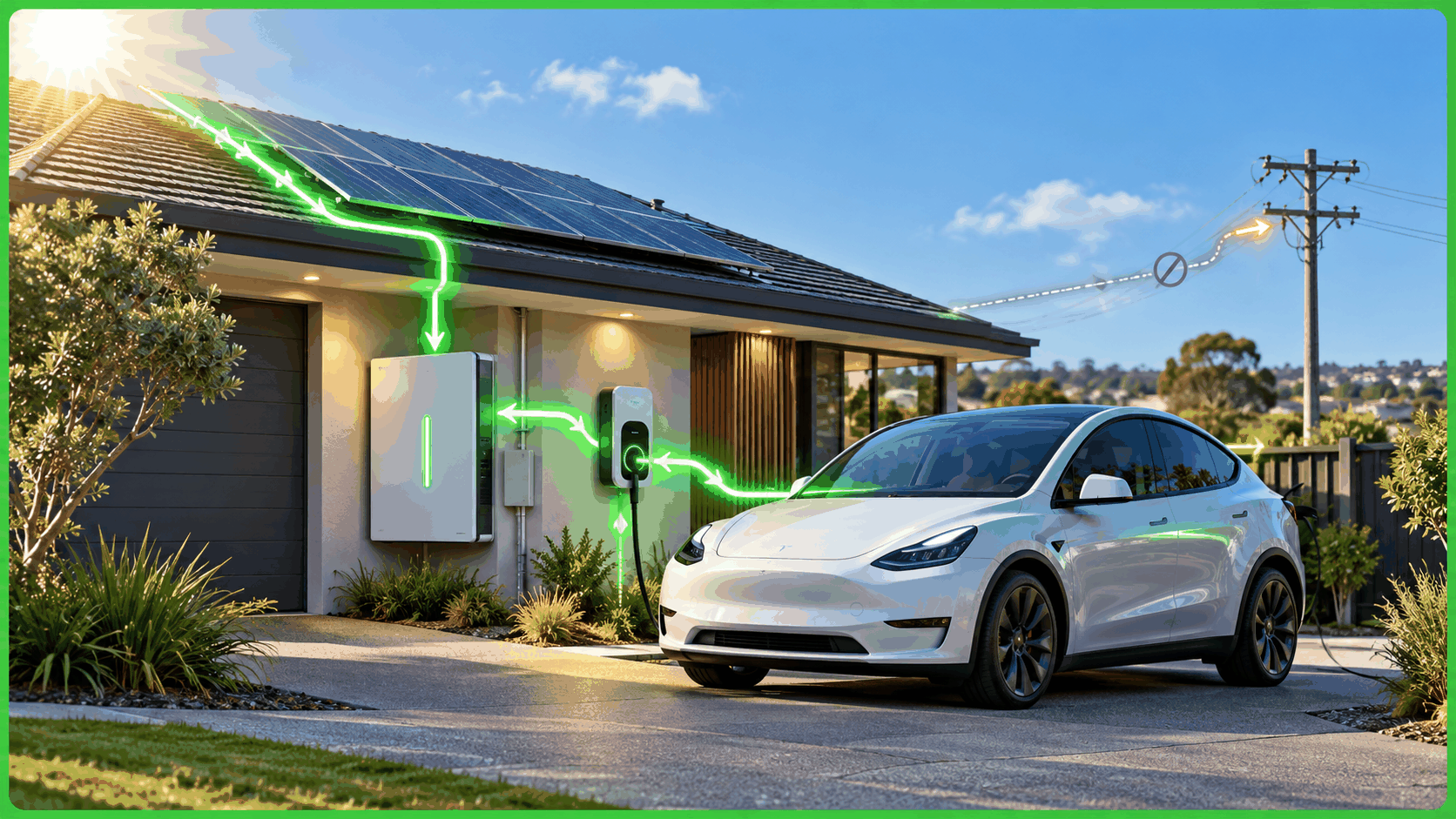
A solar-equipped home generally uses generation across several priorities. The home consumes energy first, a battery may charge next, and remaining energy can be exported or curtailed depending on the system configuration. Smart EV charging gives that surplus energy another useful destination.
When the car is connected and surplus solar is available, the charger can increase its output to absorb that energy. If a cloud reduces generation, charging can slow or pause. When generation rises again, it can resume. The vehicle becomes a flexible load that follows the energy available rather than demanding full power at an inconvenient time.
The goal is not necessarily the fastest charge every time. It is to secure enough driving range while making the best practical use of solar, stored energy and the available tariff.
Weather, work and driving needs mean solar-only charging will not always be possible. A sensible backup is to schedule a grid top-up during an appropriate lower-cost or free period offered by the household's electricity plan. Tariff windows can change, so charging settings and the electricity plan need to be considered together. Where applicable, households can use the Australian Government's Energy Made Easy plan comparison service as a next step.
Do you need a dedicated EV charger?
A standard power-point charger may be sufficient for a driver with modest charging needs and plenty of time. This type of charger can run at about 10 amps or roughly 2 kW, but it offers little control on its own.
A dedicated charger becomes more useful when the aim is to integrate the vehicle with solar and a battery. On a single-phase property, a 7 kW AC charger was described as the usual upper option. Three-phase AC charging can reach 22 kW, although many vehicles limit AC charging to 11 kW. The car's own charging limit and battery capacity therefore matter when estimating charge time.
The right choice depends on how far the car travels, how long it is normally at home, whether daytime charging is possible and how quickly it must be ready again. A retiree who can charge slowly during the day may reach a different decision from a household that needs rapid, regular top-ups.
Why does equipment compatibility matter?
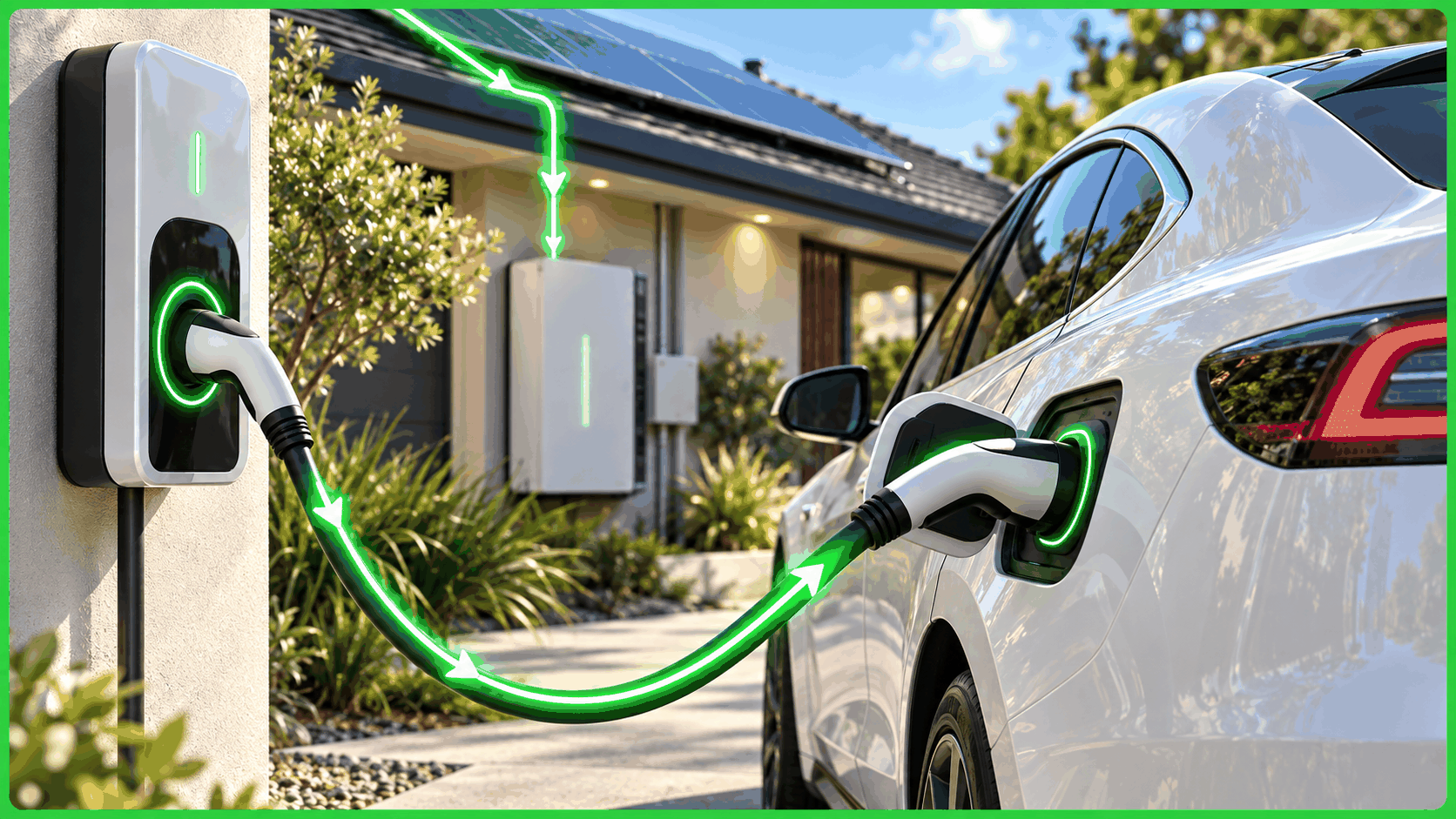
The most straightforward smart-charging arrangement is often an inverter, battery and charger designed to work within the same ecosystem. That can make surplus-solar charging a simple setting in one app and give the charger a clear view of generation, household demand and battery behaviour.
Mixed-brand systems may sometimes be integrated, particularly where supported third-party chargers are available. However, these connections can be harder to rely on over the long term. A firmware or software change may interrupt communication, and separate apps can make setup and troubleshooting less convenient.
How should you design solar around an EV?
If solar, battery storage and EV charging are being planned together, the consultation should cover the household's real operating conditions before equipment is sized. That includes existing electricity use, expected winter demand, driving habits, the times the car is at home, charging speed requirements and whether other flexible loads such as hot water or a pool pump should also be coordinated.
Inverter capacity deserves particular attention. One example involved a household using 45 kWh a day in winter before adding an EV. A proposed 5 kW battery inverter and third-party charger did not align with the customer's stated goal of charging quickly and supporting greater winter demand. A 10 kW inverter with a matching charger was presented as the more suitable direction for that case.
That example is not a universal sizing rule. It shows why a quote cannot be designed responsibly from a generic package. Two neighbouring homes may need different systems because their consumption, vehicles, tariffs and routines are different.
Questions to resolve before selecting equipment
- What AC charging rate can the vehicle accept?
- How many kilowatt-hours does the car typically need between trips?
- When is the vehicle usually parked at home?
- Should surplus solar charge the home battery or the EV first?
- What grid-charging windows suit the current electricity tariff?
- Can the inverter, battery and charger communicate reliably?
- Will future household demand change the required inverter or solar capacity?
For further reading, use the Australian Government EV information portal for national consumer guidance and the YourHome rooftop solar guide when considering household consumption and effective use of solar generation.
Key Takeaways
- Plugging in after work does not require charging to begin immediately.
- Surplus-solar mode can vary EV charging in response to available generation.
- Evening charging may compete with major household loads and rapidly drain a home battery.
- Lower-cost grid windows can supplement solar when weather or driving needs require it.
- The vehicle's AC charging limit affects the value of a higher-powered charger.
- System compatibility and careful sizing are central to reliable automation.
Frequently Asked Questions
What is the smartest way to charge an EV with solar?
Use a compatible smart charger to direct surplus daytime solar into the vehicle, then schedule any required grid top-up for a suitable lower-cost period. The best settings depend on when the car is home, its required range, the battery and the electricity tariff.
Should I charge my EV as soon as I get home?
Not necessarily. Immediate evening charging can coincide with high household demand and may quickly consume stored battery energy. You can still plug in when you arrive while using a schedule or smart control to delay charging.
Can an EV charger use only surplus solar?
Yes, when the charger and energy system support that mode. Charging can rise, fall or pause as surplus solar changes, then resume when more energy becomes available.
Is a power-point charger enough for an EV?
It may be enough for modest driving and long daytime charging windows. A dedicated smart charger provides more speed and control, which can be valuable when coordinating the vehicle with solar, a battery and tariff periods.
Should my EV charger match my inverter and battery brand?
A matching ecosystem is often the most straightforward option because monitoring and surplus-solar control can remain within one supported system. Some mixed-brand arrangements work, but compatibility and future software changes should be discussed with the installer.