
Inside a real home energy upgrade
The home solar and battery system I installed after 11 years in the industry
When hail damage led to a full solar replacement, it created an opportunity to redesign the system around the way the household now uses energy. The result combines an 18 kW Trina solar array with a 27 kWh Sigenergy battery, chosen for practical reasons including capacity, EV charger control, physical fit, backup and future flexibility.
The key judgement: equipment choice followed the household, not a generic product ranking. The solar array needed dependable output and sensible value, while the battery had to overcome the previous system’s capacity and power limits, integrate with an existing EV charger, fit a constrained installation area and provide full-home backup.
The system at a glance
The key figures and design decisions described for the upgraded home system.
Why replace the original solar and battery system?
The upgrade was triggered by a severe hailstorm in South East Queensland in late 2025. An insurance inspection found hotspots in several panels from the original 2017 installation. Thermal imagery revealed affected areas even though the panels had not visibly cracked or shattered, and the insurer wrote off the solar system.
The battery had not suffered the same damage, but replacing everything in one project made sense. It was no longer well matched to the household’s consumption, and the available battery subsidy also influenced the timing.
Which solar panels were installed, and why?
The replacement array uses 18 kW of Trina panels: 38 panels in total, with seven facing north, 11 east and 20 west. The aim was to use an efficient, established panel without moving to the highest price point.
The property may eventually be retained as a rental, so reliability, performance and warranty support mattered more than simply choosing the most expensive option. The Australian Government’s YourHome rooftop solar guide provides broader guidance on solar design and household consumption.

| Roof orientation | Panel count | Role in the design |
|---|---|---|
| North | 7 | Part of the mixed-orientation array. |
| East | 11 | Part of the mixed-orientation array. |
| West | 20 | The largest share of the array. |
What did the early production data show?
On the day the previous array was removed, it produced 41 kWh in ideal conditions. The new array produced 55 kWh on its first clear day about a week after installation, close to the shortest day of the year. For additional context, the best June day in the previous year was about 42 kWh.
This is an early snapshot, not a long-term comparison. The array grew from 15 kW to 18 kW, and its age and orientation mix changed. More data is needed before drawing broader conclusions.
Why did the battery need to change?
The previous battery provided 10 kWh of usable capacity. That was a common size when installed in 2021, but it had become small for the household. With summer air conditioning it could be empty by about 9 pm; in winter, it might last until midnight.
Its other constraint was a 5 kW inverter, which limited charging and discharging to 5 kW. If the home was using 7 kW across loads such as air conditioning, the oven and car charging, the battery could supply only part of that demand. The remaining 2 kW still had to come from the grid.
Battery capacity is therefore only part of sizing; power output also matters when several loads run together. For broader guidance on battery sizing, operation and installation considerations, see the Australian Government’s YourHome battery guide.
Why was Sigenergy chosen for this home solar and battery system?
Sigenergy was selected after weighing several suitable options. The deciding factors were specific to this home, its existing equipment and energy use.
It could control the existing EV charger
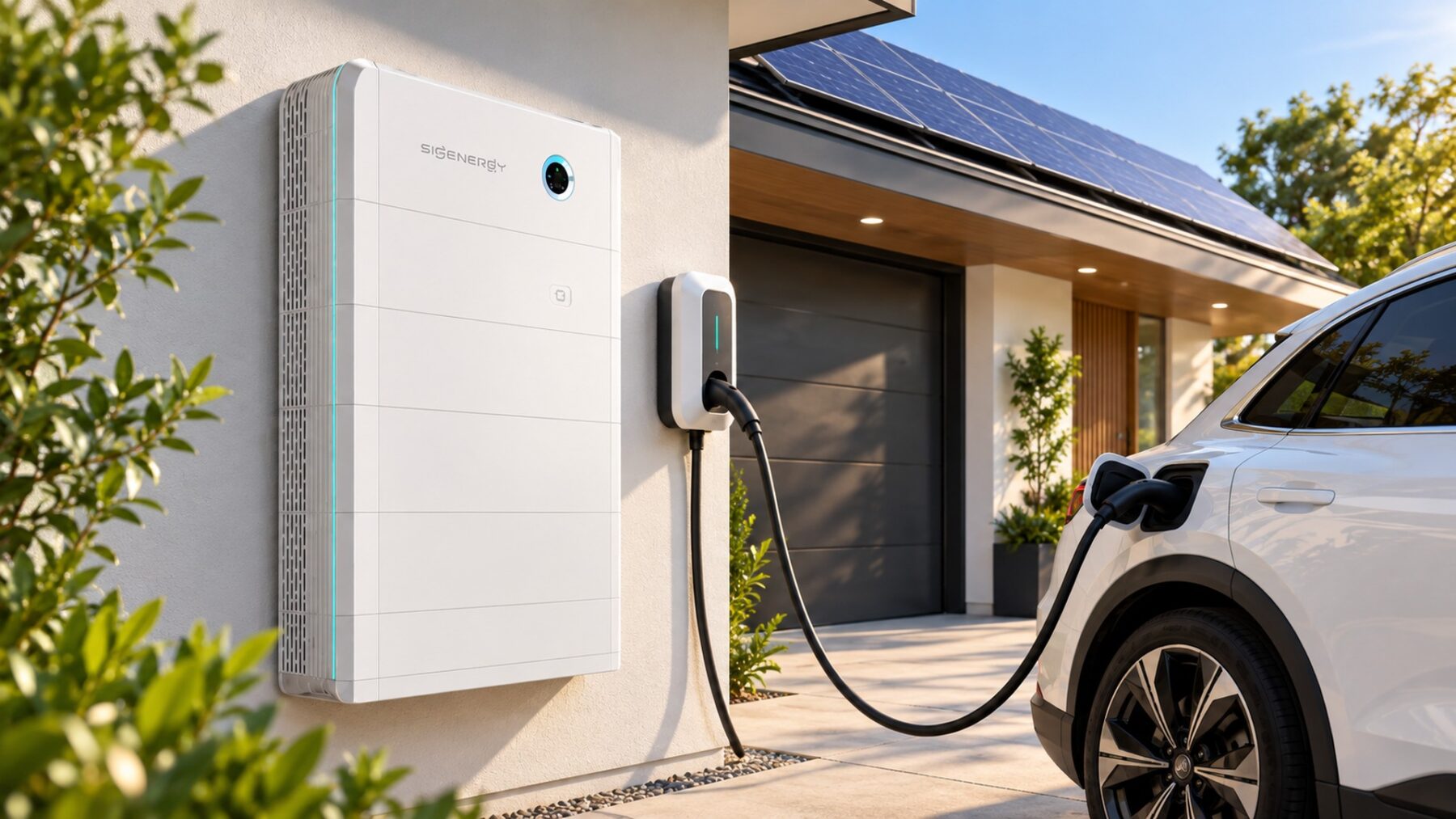
The home already had a third-party wall-mounted EV charger. Wiring it into Sigenergy’s smart port provided integrated control without replacing it with a battery manufacturer’s matching model.
That avoided an estimated $1,500 to $2,000 for a new charger and rewiring, while allowing charging to be coordinated around surplus solar and potential tariff windows.
It fitted the available installation space
Space near the switchboard was constrained. A separate inverter and battery would have forced one component into the tight single garage. The gateway could instead sit inside while the battery remained under the carport on an eastern wall.
Despite moving from the former 10 kWh usable unit to 27 kWh, the new equipment took slightly less space. Its sheltered position receives little direct summer sun and has airflow.
Backup and simple control mattered
Several short outages had interrupted ordinary household tasks, so full-home, instantaneous backup became a genuine priority. The app also made it straightforward to set charging windows, monitor the system and run backup simulations.
Start with the right battery questions
Use GI Energy’s guide to think through capacity, inverter power, backup, tariffs and future household demand before comparing products.
Download the Free Battery GuideWhat future flexibility influenced the decision?
The system is modular and stackable, with battery modules connected in parallel. New modules can be added later without being pulled down to the condition of existing modules. It can also work in AC-coupled and DC-coupled configurations.
Why consider DC EV charging?
A DC charger was not included in the initial installation, but the option influenced the choice. A typical home AC charger may be limited to around 7 kW on single phase or 11 kW on three phase, with a small number of vehicles accepting up to 22 kW. The compatible DC charger discussed can deliver up to 25 kW and is designed to form part of the battery stack.
That rate could help charge two EVs, use strong solar generation or take advantage of limited tariff windows. The platform also anticipates bidirectional charging, where a compatible EV battery may supply the home or grid. The Australian Government’s EV information service is an approved national resource for general guidance on EV ownership and charging.
The future capability remains conditional. Vehicle-to-home, vehicle-to-grid and broader vehicle-to-everything use were described as not yet mainstream. The vehicle and wider operating environment still need to support the function.
What should homeowners take from this system choice?
The lesson is not that every home should install the same equipment. A sound design must resolve actual constraints: energy use, simultaneous loads, battery power, existing equipment, available space, backup needs and realistic future changes.
For this home, Sigenergy covered more of those requirements than the alternatives considered. A new three-phase home or a property without an EV charger could lead to a different answer. The product shortlist can also change as models are released.
Solar, batteries, EV charging, tariffs and backup work as one energy system. The equipment choice should follow the design brief.
Key Takeaways
- The solar array was replaced after thermal imagery found hail-related hotspots in panels from the 2017 installation.
- The new design uses 18 kW of Trina panels across north, east and west roof faces.
- The former 10 kWh usable battery and 5 kW inverter no longer matched the household’s capacity and power needs.
- The 27 kWh Sigenergy system was chosen for EV charger integration, compact installation, full-home backup, app control and future flexibility.
- The choice was specific to this household; it was not a claim that one battery is best for every property.
Frequently asked questions
What solar panels and system size were installed?
The replacement system uses 18 kW of Trina panels, with 38 panels in total: seven facing north, 11 east and 20 west.
Why was the previous 10 kWh battery no longer enough?
The battery could be fully discharged by about 9 pm on summer days with air conditioning and around midnight in winter. Its 5 kW inverter also meant the grid still supplied the difference whenever household demand exceeded 5 kW.
Why was Sigenergy selected?
For this home, it integrated with the existing EV charger, fitted the constrained installation area, provided the desired full-home backup and offered straightforward app control, modular expansion and future DC charging options.
Does this mean Sigenergy is the best battery for every home?
No. The choice reflected this property’s energy use, existing EV charger, available space, backup priorities and future plans. A different home or business could reasonably arrive at a different battery choice.
Design the system around your home
GI Energy can review your usage, roof, existing equipment, backup needs and future plans before recommending a tailored solar and battery design.
Request a ProposalContinue exploring: contact GI Energy, learn more about solar, use the solar and battery calculator, or read about GI Energy.