Home battery comparison
The right battery depends on what your home needs most
Tesla Powerwall 3, Sigenergy and Sungrow are all strong battery options, but they suit different homes and priorities. The useful question is not which battery wins overall. It is which system best matches your electrical supply, backup expectations, preferred battery size, EV plans and need for future expansion.
Direct answer: In a Tesla-focused, single-phase home, Powerwall 3 can be a natural fit. Sigenergy stands out for integrated technology, flexible design and EV capability. Sungrow is compelling when proven support, reliability or very large storage capacity matters most. The final choice should follow the property and its priorities.
At a Glance
Each product has a distinct strength. These are decision cues, not universal rankings.
A strong ecosystem choice for Tesla owners, especially on single-phase homes where its backup design is a better fit.
Suited to buyers who value integrated technology, modular capacity, EV options and flexible single- or three-phase design.
A practical option for established support, robust outdoor placement and designs requiring substantial storage capacity.
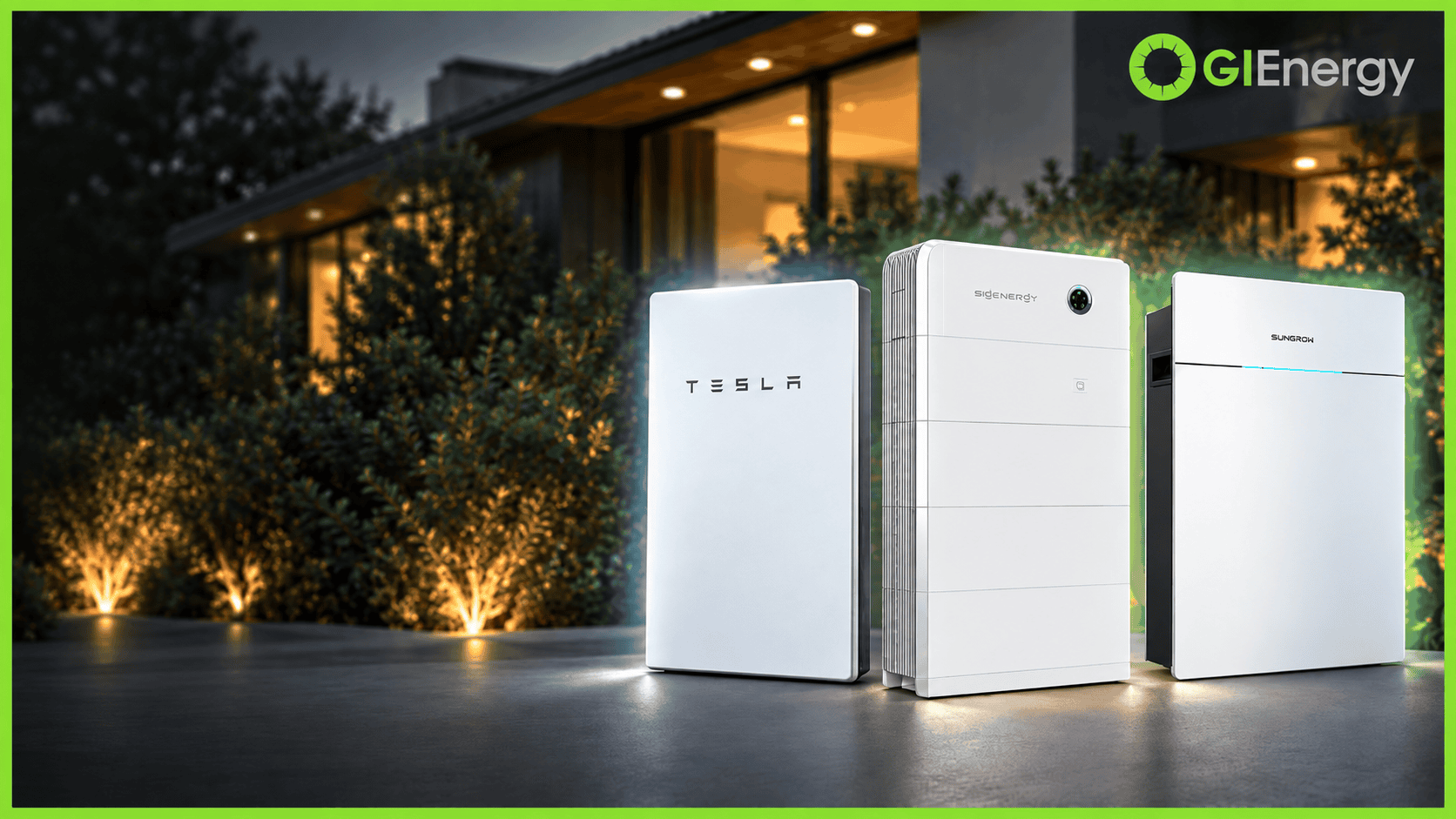
How do Tesla Powerwall 3, Sigenergy and Sungrow compare?
All three can be high-quality choices, but their strengths differ. Powerwall 3 offers a recognised brand and close Tesla integration. Sigenergy puts newer functions into one ecosystem. Sungrow combines modular design with a longer market record and strong Australian support.
| Decision factor | Tesla Powerwall 3 | Sigenergy | Sungrow |
|---|---|---|---|
| Natural fit | Tesla vehicle and wall charger owners | Technology-focused and EV-ready households | Buyers prioritising support, reliability and scale |
| System design | 13.5 kWh blocks with less freedom to mix inverter and storage sizes | Modular batteries and inverter options from smaller single-phase systems to 30 kW three-phase designs | Modular single- and three-phase range, including large residential and commercial designs |
| Backup | Best aligned with single-phase homes; three-phase backup has an important solar-recharging limitation | Single- and three-phase backup with near-instant changeover | Flexible single- and three-phase system design |
| Main trade-off | Narrower design flexibility | Newer company and less preferred for exposed outdoor locations | Fewer of Sigenergy's newer technology features |
The differences matter most when a home has three-phase power, needs substantial backup, may add an EV charger or could require much more storage later.
When is Tesla Powerwall 3 the right fit?
Powerwall 3 makes the strongest case when a household values the Tesla ecosystem. With a Tesla vehicle and wall charger, the battery and car can sit within one app, including smart charging from surplus solar. Tesla also brings a large installed base, responsive support and a product that is generally well made. Homeowners can review the official Tesla Powerwall information when considering the product.
The design constraints matter. Powerwall 3 has a built-in inverter and is generally better suited to single-phase homes. It can be installed at a three-phase property, but during an outage the battery cannot be recharged from solar until the grid returns. For a homeowner who places a high priority on resilient three-phase backup, another system may be more suitable.
Capacity also grows in 13.5 kWh blocks. An expansion pack adds another 13.5 kWh with less supporting hardware than the first unit, but it still does not provide the smaller capacity increments available from modular competitors. At the time of comparison, a system using expansion packs also had a 5 kW charge and discharge rate, which may be limiting for a larger home with higher loads.
Powerwall 3 is worth shortlisting when: you already use Tesla products, have a single-phase home, value a simple integrated ecosystem and are comfortable with its fixed capacity increments and design limits.
When does Sigenergy make more sense?
Sigenergy suits households that want broad technology integration and room to configure the system around their needs. Its ecosystem includes AC EV charging and, at the time of comparison, a distinctive DC EV charger. That DC option can support faster charging and may also provide a pathway towards vehicle-to-home or vehicle-to-grid use with compatible vehicles. The official SigenStor product information provides the manufacturer's current product reference.
Its battery modules operate in parallel. Modules of different ages or capacities can work individually instead of a newer module being pulled down to the lowest module's capacity. Within the stack limits, this supports flexible expansion.
The range supports single- and three-phase homes, multiple inverter sizes and backup through its gateway. It is energy dense, allowing substantial storage within a relatively small footprint. That flexibility can help households balance capacity, inverter power and EV charging.
There are trade-offs. Sigenergy is a newer company than Tesla or Sungrow. A 2025 recall affected its largest single-phase inverters, although the issue was addressed and affected controllers received a 12-year warranty. GI Energy is also less comfortable placing the product in a more exposed outdoor position, despite it being rated and warranted for outdoor installation.
Work through your battery priorities
Use GI Energy's guide to understand battery operation, sizing and the questions worth asking before choosing a system.
Download the Free Battery GuideWhy choose Sungrow?
Sungrow offers modular design without prioritising the newest features. It supports single- and three-phase systems, multiple inverter choices and battery capacity that can scale for demanding homes or commercial applications. Readers can also consult the official Sungrow SBR battery information.
Its strongest distinction is its longer history, reliability and support. GI Energy has used Sungrow inverters for many years and considers the company's Australian-based support among the strongest in the industry. That can appeal to buyers who place long-term service and an established product range ahead of additional technology features.
Sungrow can also suit unusually large residential storage requirements. For example, a Sigenergy system with a 25 kW or 30 kW three-phase inverter could carry a 48 kWh stack before another inverter was needed. A Sungrow design using a 20 kW inverter plus a second 10 kW inverter could accommodate up to 160 kWh of storage while staying within a total 30 kW inverter allowance.
That scale will be unnecessary for most homes, but it shows why Sungrow may be the better fit when storage expansion is a defining requirement. It may also be preferred where the battery must sit outdoors in a more exposed location.
How should you decide between them?
Start with the property and the outcome, then select the product. A neighbour, colleague or family member may make a different choice because their electrical supply, daily load and backup priorities are different.
- Confirm the home's supply: single-phase and three-phase properties create different backup and inverter design considerations.
- Define the backup goal: decide which loads matter during an outage and whether solar must continue recharging the battery.
- Match inverter power to demand: a large battery alone does not guarantee a high charge or discharge rate.
- Plan capacity in sensible increments: consider current usage and whether future expansion is likely.
- Include EV plans: an existing Tesla setup or an interest in DC and bidirectional charging may influence the ecosystem choice.
- Weigh technology against track record: decide whether newer integrated features or longer-established support matters more to you.
- Consider the installation location: exposure and available floor or wall space may narrow the shortlist.
Sometimes one requirement makes the answer straightforward. Often, Sigenergy and Sungrow are close: Sigenergy leans towards integrated technology, while Sungrow leans towards established support and larger storage flexibility. Powerwall 3 remains compelling when its ecosystem and single-phase design align with the household.
Key Takeaways
- There is no single best battery for every Australian home.
- Powerwall 3 is strongest when Tesla ecosystem integration matters and the property is single-phase.
- Sigenergy offers flexible modular design, integrated EV options and strong single- or three-phase backup capability.
- Sungrow suits buyers who value established support, reliability, robust placement and the potential for very large storage designs.
- Battery capacity, inverter power, backup behaviour and future expansion should be designed together.
Frequently Asked Questions
Which is better: Tesla Powerwall 3, Sigenergy or Sungrow?
None is universally better. Powerwall 3 can suit a Tesla-focused single-phase home, Sigenergy can suit buyers wanting flexible technology and EV integration, and Sungrow can suit those prioritising established support or very large storage capacity.
Can Tesla Powerwall 3 be installed on a three-phase home?
Yes, but the backup limitation is important. During a grid outage, the battery can supply backed-up loads until depleted, but solar cannot recharge it until the grid returns. Homeowners seeking stronger three-phase backup may prefer another design.
What is the main advantage of Sigenergy?
Its main advantage is flexible, integrated technology. It offers modular batteries operating in parallel, multiple inverter sizes, single- and three-phase backup, and AC and DC EV charging options within the ecosystem.
What is the main advantage of Sungrow?
Sungrow combines modular design with a longer market history, strong Australian-based support and the ability to accommodate substantial storage in larger residential or commercial designs.
Does a larger battery automatically provide more power?
No. Storage capacity and inverter charge or discharge power are separate design considerations. A system can hold a large amount of energy while still having a charge or discharge rate that may not suit a home's peak loads.
Get a battery design matched to your home
GI Energy can assess your supply, usage, backup needs, EV plans and future capacity before recommending a system.
Request a ProposalContinue exploring: contact GI Energy, learn more about solar, use the solar and battery calculator, or learn about GI Energy.