Solar panel buying advice
Your panels still determine how much energy your system can deliver
Battery rebates have shifted attention towards storage, but the solar array remains the engine that charges a home battery. Panels that appear similar can perform differently in heat, degrade at different rates and receive very different levels of manufacturer support. Those differences can influence production and long-term system value.
Are all solar panels the same? No. Datasheets may look similar, but real-world output, heat tolerance, efficiency, degradation, reliability and warranty support can vary. The right choice depends on the roof, system size, battery, household demand, budget and the conditions the panels will face.
Solar panel differences at a glance
These figures reflect GI Energy's real-world comparison and research into commonly used solar panels. Each should be considered within its stated context.
Why can similar solar panels produce different results?
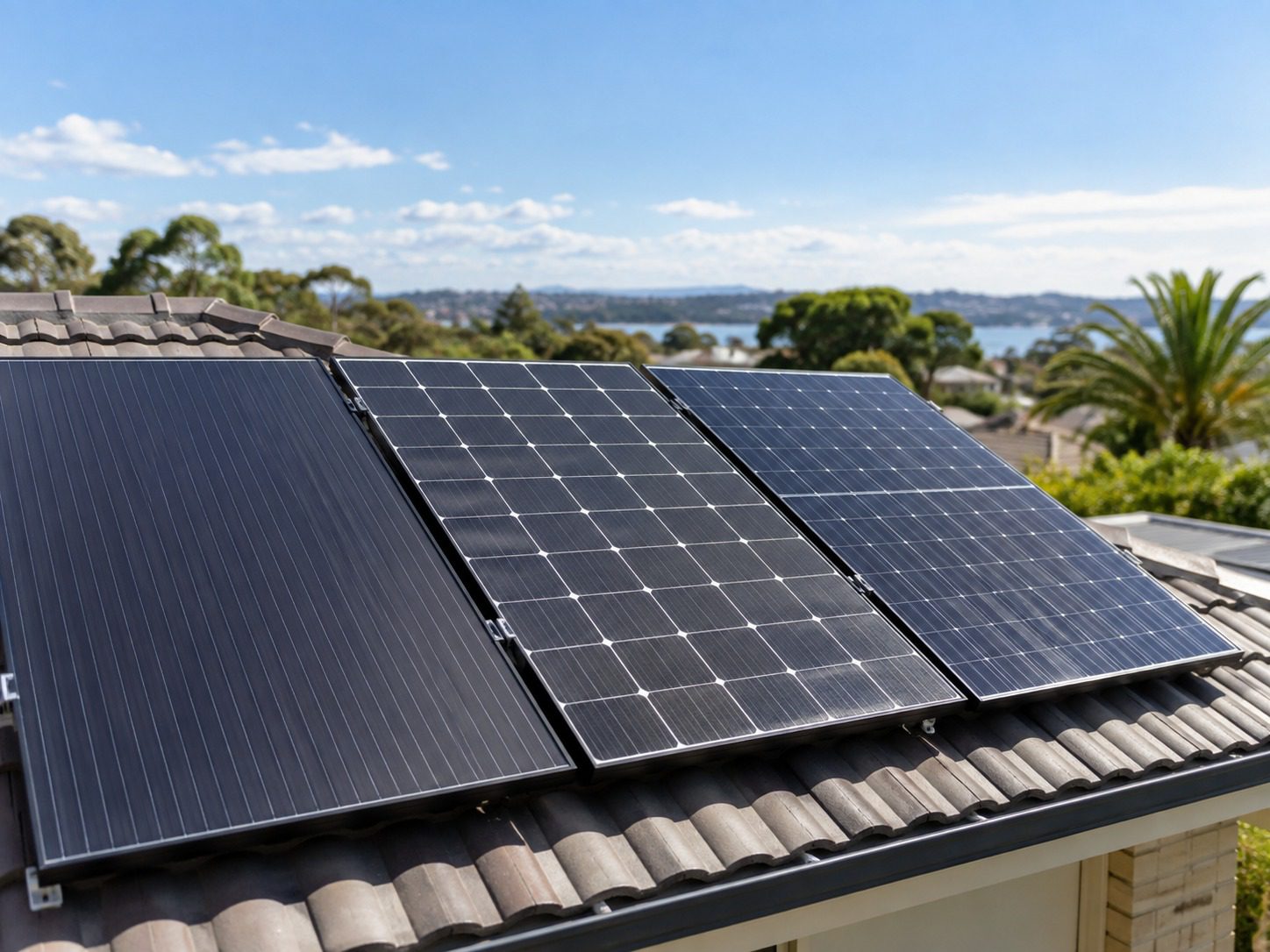
A datasheet is useful, but it does not show every aspect of performance on a working roof. GI Energy compared two systems installed near each other using the same inverter and panels that looked technically similar on paper.
The 14.96 kW Phono Solar system produced 208 kilowatt hours for each kilowatt of solar installed during the period examined. The 13.94 kW REC Alpha system produced 169 kilowatt hours per installed kilowatt. That represented a 23% difference in this case, despite the REC Alpha panel appearing stronger on its datasheet and costing more at the time.
Important context: the installations were not identical. The Phono panels were installed at a four-degree southerly pitch, while the REC system used northern and mainly western roof areas at a 24-degree pitch. This is useful real-world evidence, not a controlled laboratory test or a universal result for either brand.
The broader lesson is that panel technology, construction and actual operating performance deserve attention. A higher purchase price or stronger-looking specification does not automatically deliver more energy on every roof.
How do heat, efficiency and degradation affect solar panels?
Heat performance matters when electricity is valuable
Solar panels lose output as they become hotter. GI Energy's research found an output reduction of about 9.6% for a premium panel and about 12% for a more moderate panel when roof temperatures reach roughly 65°C to 75°C. On a 10 kW system, that gap was estimated at 240 watts.
This can matter in the middle and later part of a summer day, when air conditioning may increase household consumption. A better-performing array can continue supplying more energy at that time, potentially allowing the household to draw on its battery later.
Degradation accumulates over decades
Panel output also declines over time. The examples examined ranged from annual degradation of about 0.25% for a premium panel to 0.4% for a value-oriented panel. The difference appears small in one year, but it compounds across a 20- to 25-year system life.
Based on the 2026 average electricity rate used in GI Energy's calculation, the lower-degradation example could generate an estimated $3,000 to $5,000 more energy value over its lifetime. Actual value will depend on system performance, electricity rates and how the energy is used.
Efficiency helps make limited roof space work harder
Efficiency determines how much panel capacity can fit within the available roof area. Panels near 25% efficiency were compared with commonly used options around 22% to 23%. That difference may allow an additional panel, potentially close to another 500 watts, where roof space and system design permit.
Homeowners planning an array can also consult Australian Government guidance on rooftop solar design.
Plan the solar and battery system together
Use GI Energy's free guide to consider system design, battery needs and the questions worth asking before making a decision.
Download the Free Battery GuideDoes Tier 1 prove that a solar panel is high quality?
No. Tier 1 is primarily a financial classification of the manufacturer. It may indicate that the business has financial scale or backing at the time of assessment, but it does not prove product quality, reliability, testing standards or long-term performance.
GI Energy's research found that 83% of the manufacturers examined failed at least one reliability test. Potential issues included microcracks, moisture ingress and junction box problems. Larger panels, thinner glass and pressure to reduce manufacturing costs were identified as possible contributing factors.
Panel efficiency has improved, but that does not mean every measure of reliability has improved with it. Buyers should look beneath broad labels and ask what testing a particular module has passed.
What makes a long solar panel warranty meaningful?
Panel warranties now commonly extend for 25 years and, in some cases, 30 years. The duration looks reassuring, but the warranty is only useful if the manufacturer remains available and provides a practical way to obtain support.
An Australian presence matters because dealing with an overseas manufacturer can become difficult if a panel fails, particularly when the original installer is no longer operating. Inspecting and replacing modules already mounted on a roof can also be time-consuming and costly.
GI Energy identified Trina Solar, Canadian Solar, Phono Solar, Aiko and REC as established brands with local employees, offices or support networks. The brands GI Energy most commonly used at the time were Aiko, Phono Solar, Trina and Canadian Solar. This is not a claim that one brand will be best for every property.
Homeowners can also review ACCC guidance on solar panels, batteries and warranties when considering quotations, contracts and warranty support.
Why should solar panels and batteries be designed together?
The array produces the energy that charges the battery. If it is too small, performs poorly in heat or loses output more quickly, the battery may receive less solar energy than expected. Panel and battery decisions therefore form part of the same system design.
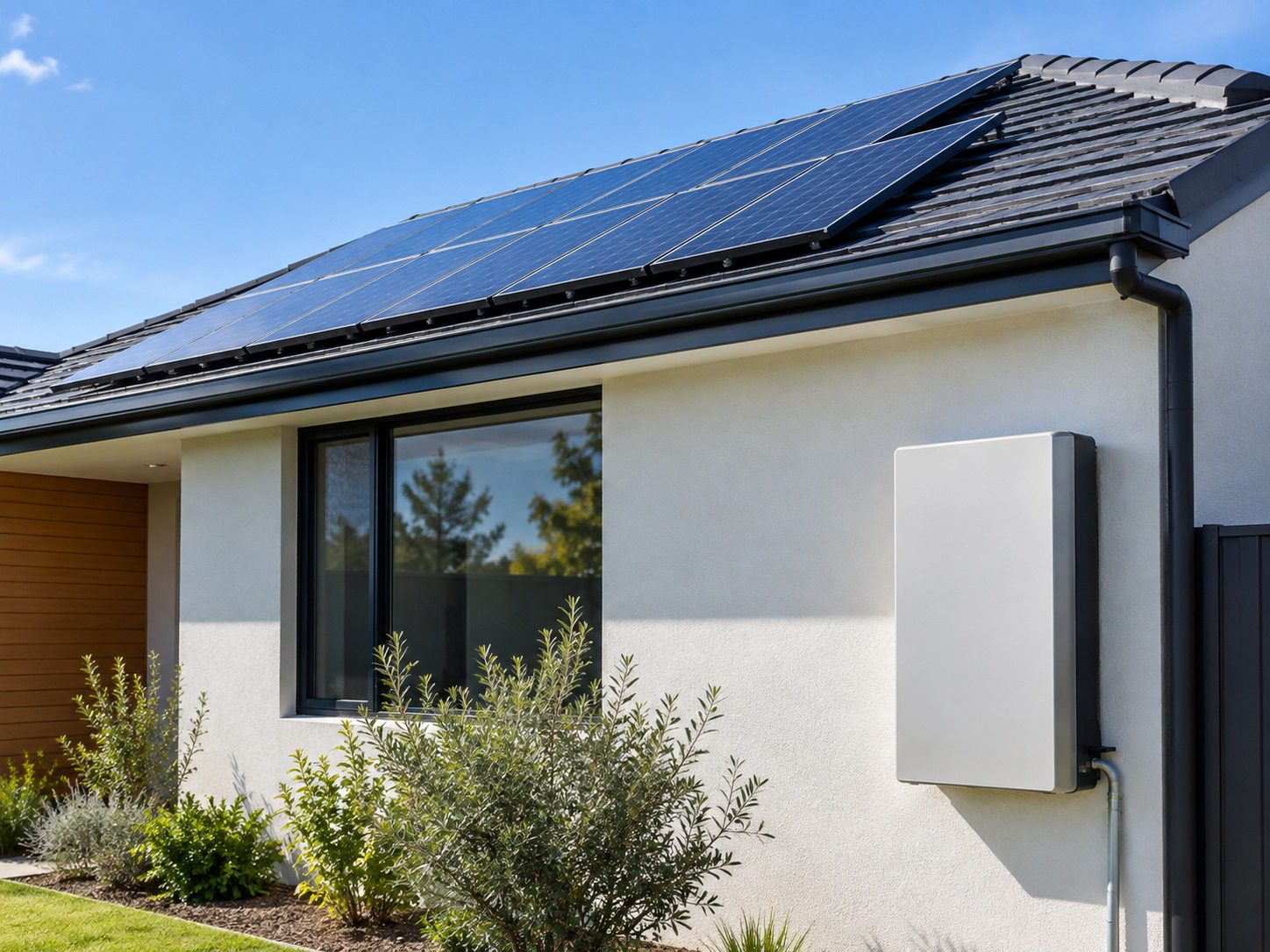
Panels may carry warranties of 25 to 30 years, while the battery example used by GI Energy carried a 10-year warranty. That means the panels may remain on the roof through the life of more than one battery.
Adding panels later is not always straightforward. Inverter trackers, string design and available roof space can make expansion more complex than homeowners expect. Where budget and roof area allow, it is worth considering future loads and the desired battery size during the initial design.
Australian conditions add another layer. High UV exposure, summer heat, salt near coastal homes and severe storms can all influence the suitability of a panel. In hail-prone areas, ask how the proposed module has been tested and whether that testing reflects the local risk.
For a broader explanation of how the two technologies work together, see Australian Government information about solar and batteries.
What should homeowners ask before choosing solar panels?
Price matters, but it should not be considered alone. Among reputable manufacturers, GI Energy identified purchase-price differences of around 10 to 12 cents per watt before GST between cost-effective and more premium options. On a larger array, that can add up quickly.
A higher price does not automatically prove better quality, just as the lowest upfront price does not automatically provide the strongest return. A useful consultation should examine:
- real-world production evidence, not only datasheet ratings;
- temperature performance in hot roof conditions;
- panel efficiency and the usable area of the roof;
- annual degradation and expected retained output;
- reliability, hail and module testing;
- Australian warranty support and manufacturer presence;
- how the array matches the battery, inverter and household load profile; and
- the household's budget, backup needs and future energy plans.
The aim is a properly considered system rather than a generic panel choice. Panel capacity, battery sizing, inverter design and household consumption should be discussed as one connected decision.
Key Takeaways
- Solar panels that look similar on paper can deliver different real-world results.
- Heat performance, efficiency and degradation can influence production and lifetime value.
- Tier 1 describes the manufacturer's financial position, not the quality of an individual panel.
- A long warranty needs a manufacturer with accessible Australian support behind it.
- The solar array should be designed alongside the battery, inverter, roof and household energy needs.
- Neither the cheapest nor the most expensive panel is automatically the right choice.
Frequently asked questions
Are all solar panels basically the same now?
No. Panels can differ in real-world output, heat performance, efficiency, degradation, reliability and warranty support, even when their datasheets appear similar.
Why does solar panel quality matter if I am getting a battery?
The solar array produces the energy used to charge the battery. Panels that produce less energy, lose more output in heat or degrade faster can reduce the energy available for storage and household use.
Does Tier 1 mean a solar panel is high quality?
No. Tier 1 is a financial classification relating to the manufacturer, not proof of panel quality, reliability, testing standards or long-term performance.
Why is heat performance important in Australia?
Solar panels lose some output as they become hotter. Australian roofs can reach high temperatures in summer, often when household demand from air conditioning is also elevated, so the panel's temperature performance can have a practical effect.
How much does solar panel degradation matter?
Small annual differences compound over a system life of 20 to 25 years. A panel with a lower degradation rate can retain more of its output and produce more energy over that period.
What should I ask before choosing solar panels?
Ask about real-world performance, heat tolerance, efficiency, degradation, reliability testing, hail resistance, Australian warranty support and how the proposed array fits your roof, battery, energy use and budget.
Discuss a system designed for your home
GI Energy can review your roof, household consumption, battery requirements and long-term plans before recommending a system.
Request a ProposalContinue your research
- Contact GI Energy to discuss your property and energy goals.
- Learn more about solar and the decisions involved in choosing a system.
- Use the Solar and Battery Calculator to explore a system for your household.
- Learn about GI Energy and its approach to energy advice.