
Smarter solar use
Make daytime solar work harder across your home
Installing solar is only part of the job. The way hot water, an electric vehicle, pool equipment and other substantial loads are scheduled can materially change how much solar a household uses. Thoughtful controls and clear priorities help direct available energy to the right appliance at the right time.
The best way to use solar to run your biggest energy costs is to move flexible loads into the solar-production window and control them in the right order. A timer may be enough for some homes, while a compatible battery and energy-management system can respond more intelligently to changing solar production, weather and household demand.
At a Glance
A well-configured system gives available solar a useful sequence of jobs.
Where does your daytime solar actually go?
Solar generation first supplies whatever is operating in the home or business. If a battery is present, surplus generation can then charge it. Once immediate demand has been supplied and the battery is full, the remaining energy is generally exported.
That default flow is not always the most valuable use of the available solar. The alternative is to identify flexible loads that can operate during the day, then configure the system to serve them when sufficient energy is available. The YourHome rooftop solar guide offers further reading on making effective use of solar generation.
Hot water, EV charging and pool equipment are strong candidates because they can represent meaningful loads and often provide some flexibility around operating time. The aim is not simply to switch everything on at once. It is to establish priorities that reflect the household’s needs, equipment and tariff.
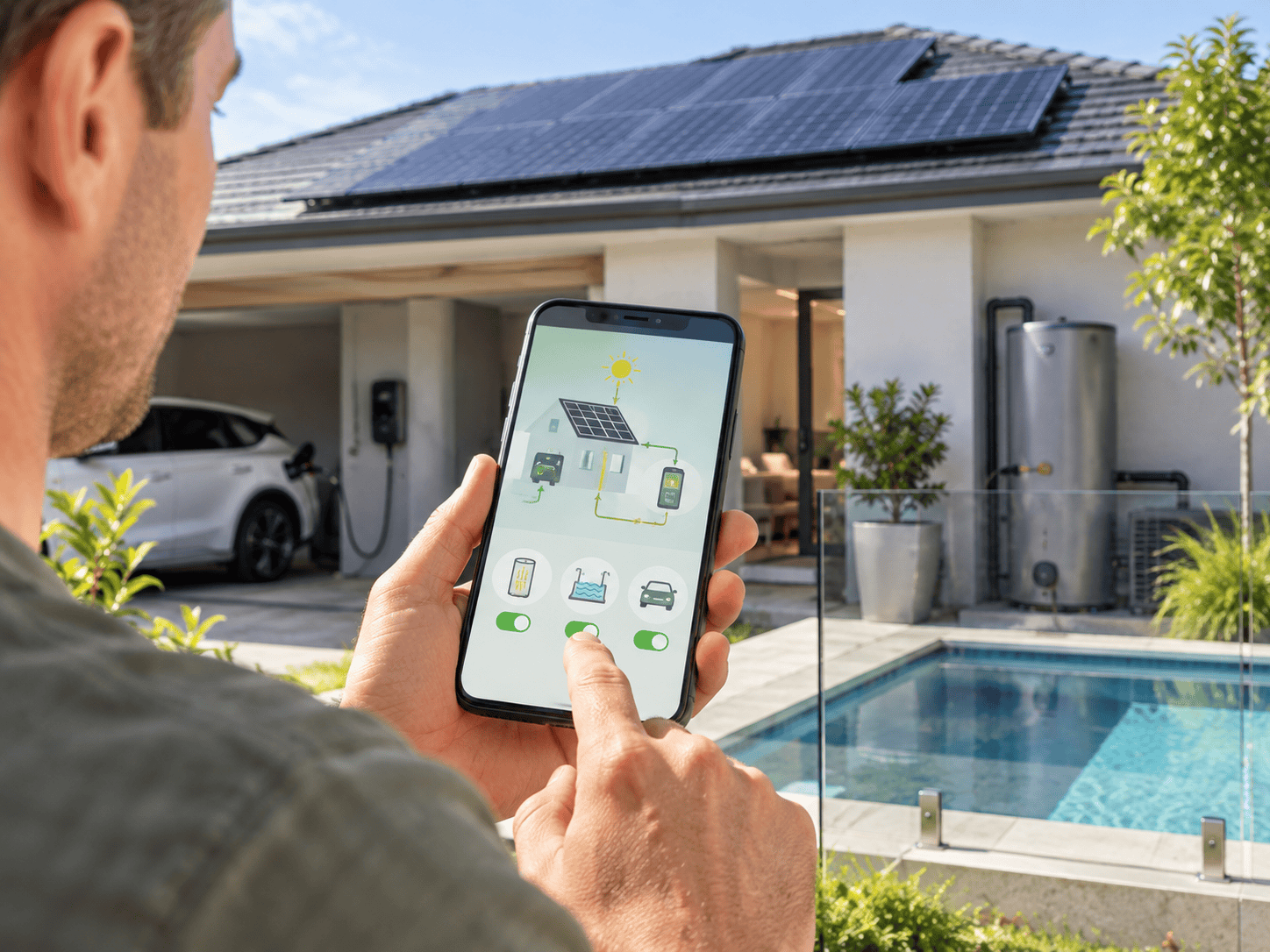
How to use solar to run your biggest energy costs intelligently
Electric hot water is often the most straightforward place to begin. Many homes have previously heated water on a controlled-load or off-peak tariff. With solar, that heating cycle can instead be moved towards the middle of the day.
Basic timer versus intelligent control
| Approach | How it operates | Practical trade-off |
|---|---|---|
| Fixed timer | Turns the hot-water element on and off at predetermined times, such as within a daytime window. | Simple, but it cannot tell whether enough solar is available when the heating cycle begins. |
| Intelligent control | Waits until the configured amount of surplus solar is available and can also consider battery charge. | More responsive to variable production, but it depends on compatible equipment and correct configuration. |
A 3.6 kW hot-water element is a common example, although some homes may have a 2.4 kW element or another size. With a fixed timer, a 3.6 kW element draws that power from whatever source is available when the timer starts. If solar production is insufficient, some or all of the power may come from the battery or grid.
A smarter arrangement can wait until more than 3.6 kW is being exported and, where relevant, until the battery is full. Heating might begin at 9:30 am on a clear day or closer to midday after an overcast morning. The start time changes, but the objective remains a complete heating cycle.
What if the weather does not cooperate?
Reliable hot water still matters. An intelligent setup can include a fallback point: if the tank has not completed its heating cycle by a specified time, it draws from the available source. That may be solar, the battery or, when necessary, the grid.
A daytime timer can also work well for some households. Its limitation is that it follows the clock rather than actual solar conditions. On a rainy day without a battery, the heating load may therefore come directly from the grid.
Understand your battery options
Use GI Energy’s guide to explore the questions that matter when planning storage and household energy priorities.
Download the Free Battery GuideHow can solar and a battery support EV charging?
An EV is another substantial but potentially flexible household load. The available control depends on how the vehicle is charged. A standard power-point connection provides a lower charging level, with much of the scheduling handled through the vehicle rather than the solar system.
A compatible wall charger can provide more options. When the charger and battery system communicate directly, or when the battery system can control a supported third-party charger, the household can configure charging priorities in an app.
Those priorities might place the vehicle before the battery, charge the battery first, or limit vehicle charging to solar and a chosen time window. A particular tariff may justify drawing as much energy as possible during a nominated period, whether that energy comes from solar or the grid.
Existing equipment changes the design conversation. If an EV charger is already installed, its compatibility should be checked before selecting the wider battery and control system. Building the complete energy ecosystem together provides more freedom, but an existing charger may still be integrated where the chosen system supports it.
For a broader national consumer reference covering EV ownership and charging, see the Australian Government EV information.
Can solar run a pool pump and pool heating?
Pool filtration is commonly scheduled through the pool equipment itself, making it another load that can be moved into daylight hours. Some battery and energy-management systems can also integrate the type of pool heater that resembles an outdoor air-conditioning unit.
The same priority-based thinking applies. A household might choose hot water first, followed by the pool pump or heater once the earlier need has been met. Another household can choose a different order. The useful setting is the one that reflects its actual routine and preferences.
Across hot water, pool equipment and regular EV charging, combined consumption can reach roughly 10 to 15 kWh a day for some households. The result depends on the load, season, location, number of vehicles and charging frequency. That is why small scheduling decisions can accumulate into a meaningful difference over the life of a system, without creating a universal savings promise.
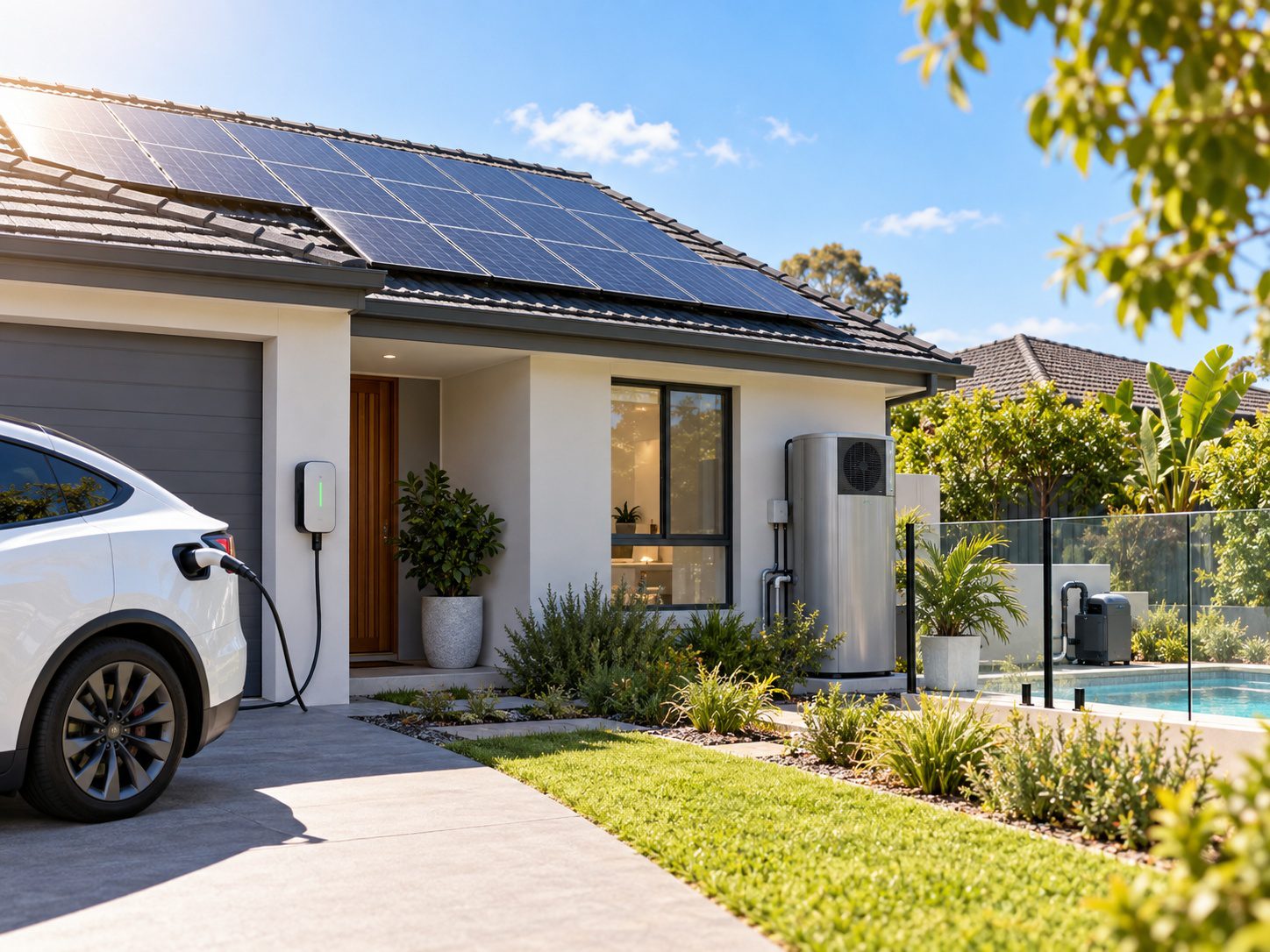
Why system design matters more than individual products
Smart energy use starts with a detailed conversation about the property. The designer needs to understand the major loads, how and when they operate, the household schedule, existing equipment, tariff structure and future plans.
A large battery does not automatically solve every problem. In one household example, a 25 kWh battery had been installed while hot water remained on a controlled load. The battery was filling while 15 to 20 kWh could still be exported, and around 7 to 8 kWh a day could potentially have served hot water. Correcting that arrangement later required another visit.
The example illustrates why commissioning and load integration deserve attention during the original installation. Product quality matters, but so do the electrical configuration, software settings and advice behind the system.
Future changes should also be considered. A household may add an EV, install pool heating or move from gas towards an all-electric home over time. A thoughtfully designed system leaves room to integrate those loads where the equipment permits, rather than forcing the owner to rebuild the energy strategy each time something changes.
Key Takeaways
- Solar first supplies active household loads, then charges a battery where installed, before remaining energy is exported.
- Hot water, EV charging and pool equipment can often be shifted towards periods of stronger solar production.
- A fixed timer follows a schedule; intelligent control can respond to actual surplus solar and battery status.
- Fallback settings help preserve hot-water availability when solar production is poor.
- EV charger compatibility and tariff settings can materially affect the available charging strategy.
- Good results depend on consultation, installation and configuration as well as the products selected.
Frequently Asked Questions
What normally happens to solar energy during the day?
Solar generation first supplies the appliances operating in the home or business. If a battery is installed, surplus energy can then charge it. Once those needs are met, the remaining solar is exported to the grid unless the system has been configured to redirect it elsewhere.
Is a timer or smart control better for solar hot water?
A timer is simpler and may work well when it places water heating within a reliable daytime solar window. Smart control is more responsive because it can wait for sufficient surplus solar instead of switching on at a fixed time regardless of weather or household demand.
Do I need a battery to run hot water from solar?
Not necessarily. A timer can shift water heating into the middle of the day without a battery. A compatible battery and energy-management system can provide more intelligent control by considering solar production, battery charge and the household's priorities.
What happens to smart hot water control on a cloudy day?
The system can use a fallback time to ensure the water completes its heating cycle. Depending on the system and available energy, that power may come from solar, the battery or, as a final source, the grid.
Can an EV be charged from excess solar?
Yes, when the charger, vehicle and energy system provide compatible controls. Charging priorities can be configured around solar production, battery charging and relevant tariff windows. Existing chargers need to be checked for compatibility before the wider system is designed.
Can solar also run a pool pump or pool heater?
Pool filtration is commonly scheduled through the pool equipment, while some battery and energy-management systems can also integrate pool heating. The household can then set priorities, such as heating water first and operating pool equipment after that.
Plan the loads, controls and priorities together
GI Energy can review your current equipment, household routine and future energy needs before recommending a suitable system design.
Request a ProposalExplore GI Energy